What Parking Lot Paving In Jersey City Involves
Parking lot paving in Jersey City means building or renewing the paved surface that vehicles use every day, from the entrance and driving lanes to the parking stalls and turning areas. For local businesses, apartment properties, offices, and shared-use sites, the goal is simple: create a smoother lot that handles traffic, sheds water, and gives visitors a better first impression.
The work usually starts with a close look at the existing surface and the base underneath it. An experienced team checks for soft spots, broken edges, drainage trouble, and signs that the old pavement has reached the point where patching is no longer enough. In Jersey City, that matters because lots often deal with tight access, heavy stop-and-go traffic, delivery vehicles, and weather changes that wear pavement down faster.
Typical steps in the paving process
- Review the lot layout, drainage flow, and areas that need correction.
- Remove failed pavement or loose material when the existing surface is no longer sound.
- Shape and compact the base so the new surface has solid support.
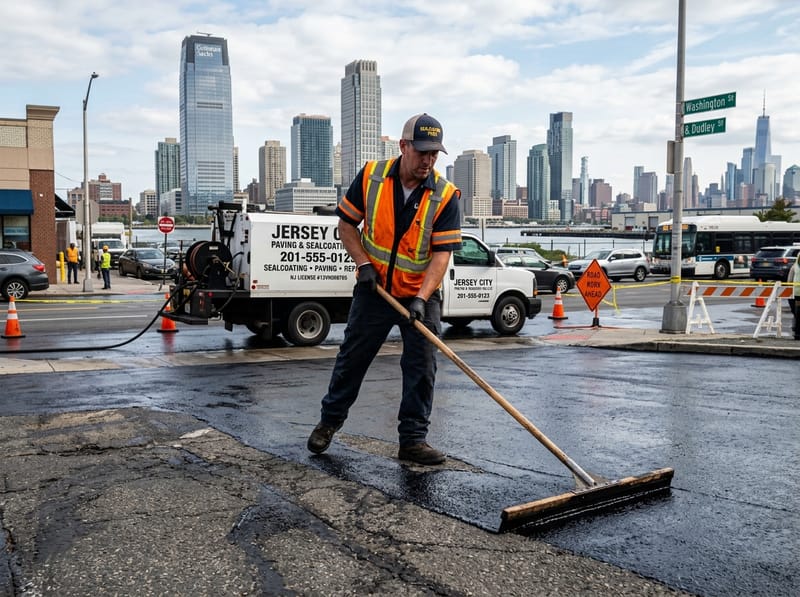
- Place asphalt in a smooth, even layer that matches the needs of the site.
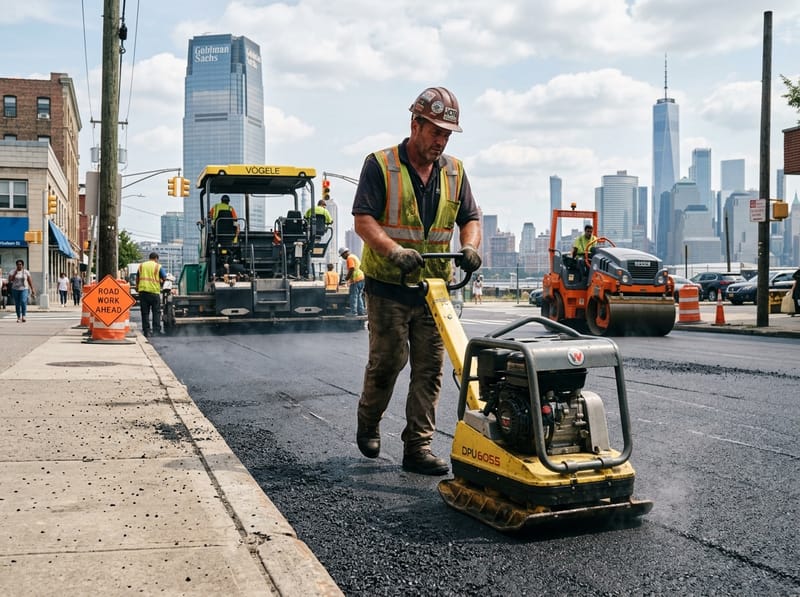
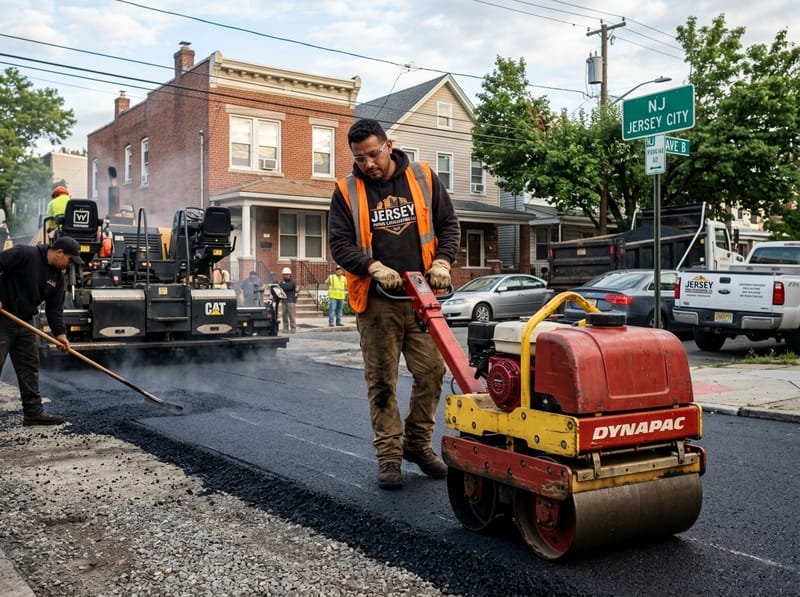
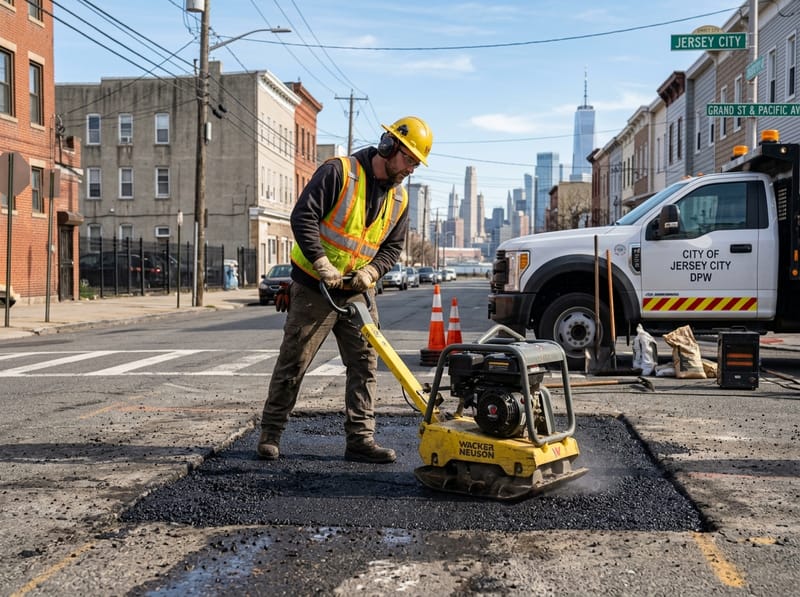
- Compact the surface carefully so it locks together and performs well under traffic.
- Add striping or markings when the lot is ready for organized parking and safe movement.
The result is not just a darker surface. Proper parking lot paving in Jersey City gives you a lot that feels easier to use, looks more professional, and supports your property instead of becoming a constant maintenance problem.
When You Need Parking Lot Paving
You may need parking lot paving in Jersey City when the surface starts creating safety issues, drainage problems, or a poor experience for the people who use your property. If your lot has reached the point where repairs are frequent and the surface still keeps breaking down, paving may be the better path.
Common signs include cracks that keep spreading, potholes that return after patching, soft or sinking areas, rough edges, faded striping, and water that sits on the surface after rain. Those issues do more than make the lot look tired. They can also slow down traffic, create trip hazards, and make parking feel less organized for customers, tenants, and staff.
You should also think about paving when the lot no longer matches the level of activity on the property. A small surface flaw can become a bigger issue when the lot sees daily deliveries, regular turnover, or constant vehicle movement. Jersey City properties often deal with all of that at once, which means pavement needs to be ready for more than light use.
- Surface cracking is spreading across several areas.
- Repeated patching is not lasting through normal traffic.
- Drainage is weak and water keeps pooling.
- The lot feels uneven, soft, or bumpy in key areas.
- Customers or tenants are avoiding certain spaces because the surface looks rough.
- The lot no longer supports the appearance your property needs.
When those warning signs show up together, parking lot paving in Jersey City can restore function, improve appearance, and help your site feel easier to manage again.
Why Parking Lot Problems Happen
Parking lot damage usually comes from everyday use combined with water, weather, and a base that is no longer holding up the way it should. In Jersey City, pavement takes a constant beating from traffic, rain, freezing conditions, hot sun, snow removal, and the pressure of vehicles turning in tight spaces.
One common cause is water. When drainage is weak, water slips into small cracks, softens the layers below, and makes the surface break apart faster. Another common cause is a base that was not compacted well enough, or a base that has settled over time. Once the support underneath the asphalt moves, the surface above it starts to sink, crack, or buckle.
Traffic also plays a major role. Delivery trucks, daily commuter traffic, and repeated turning motions place stress on the same routes again and again. Sharp turns and braking can wear down the surface near entrances, exits, and high-use stalls. In winter, plowing and de-icing can add even more stress by scraping the surface and letting water move into weak spots.
Other causes include utility cuts, old patchwork that no longer bonds well, and edges that break down when the lot has poor containment around the perimeter. None of these problems happen overnight. They build slowly, which is why a lot can look acceptable for a while and then start failing more quickly once the weak spots connect.
Understanding the cause matters because it changes the solution. If the issue is only on the surface, targeted repair may help. If the base, drainage, or overall layout is failing, parking lot paving in Jersey City gives you a stronger long-term fix.
What Affects The Cost Of Parking Lot Paving
The cost of parking lot paving in Jersey City depends on what the site needs before the new surface can go down and how much work is required to make the lot perform well after installation. A lot with good drainage and a solid base needs less corrective work than a lot that is sinking, holding water, or breaking apart across a wide area.
One major factor is the condition of the existing pavement. If the old surface must be removed, broken up, or rebuilt in sections, the project becomes more involved. If the base underneath is unstable, that also adds work because the problem has to be fixed below the surface instead of covered over.
Access matters too. Jersey City properties can have tight driveways, narrow entry points, nearby buildings, active tenants, or limited space for equipment and material staging. Those details affect how the work is organized and how much planning is needed to keep the site moving.
Other cost factors include the shape of the lot, the amount of drainage correction required, the need for striping or marking, the amount of traffic control needed during the job, and whether the work must be phased so the property stays open. The best paving plan is not the one that simply covers the ground fastest. It is the one that gives your property a surface that lasts, drains properly, and fits the way your lot is used.
- Existing pavement condition and base stability
- Drainage needs and low spots
- Lot size, shape, and layout complexity
- Access for equipment, trucks, and material delivery
- Striping, markings, and site organization needs
- Whether the lot can be closed or must stay partially open
For parking lot paving in Jersey City, the right cost discussion starts with a site review and a clear look at what the surface actually needs.
Repair Versus Replacement For Your Parking Lot
Choosing between repair and replacement comes down to how widespread the damage is and whether the surface below the pavement is still doing its job. If you only have a few isolated cracks, a small pothole area, or one section that is wearing faster than the rest, repair may be enough to keep the lot functional for the time being.
Replacement becomes the better choice when the damage keeps coming back, covers a large part of the lot, or points to deeper problems under the surface. If the base has failed, the lot is holding water, or the pavement is breaking apart in several directions, patching the top layer will not solve the real issue. That is when parking lot paving in Jersey City gives you a more dependable result.
Here is a simple way to think about it: repairs are best for limited trouble, while replacement is best when the trouble is structural or widespread. A careful site review can show whether the problem is a few damaged spots or a system-wide failure. That difference matters because it affects how long the fix will last and how much maintenance you will need later.
Many property owners in Jersey City start by hoping for repairs, and that can be the right move in some cases. But when the lot keeps failing in new places, replacement often saves time, reduces repeat work, and gives you a cleaner surface that is easier to maintain.
How We Pave A Parking Lot In Jersey City
Parking lot paving works best when each step is done in the right order and with the site conditions in mind. In Jersey City, that means planning around traffic flow, drainage, access points, and the way your property actually operates day to day.
The process usually begins with a walkthrough of the site. The crew looks at the surface, the slope, the edges, and any trouble spots that need more than a simple overlay. From there, the job is organized so the paving work supports the lot instead of hiding old problems under a new surface.
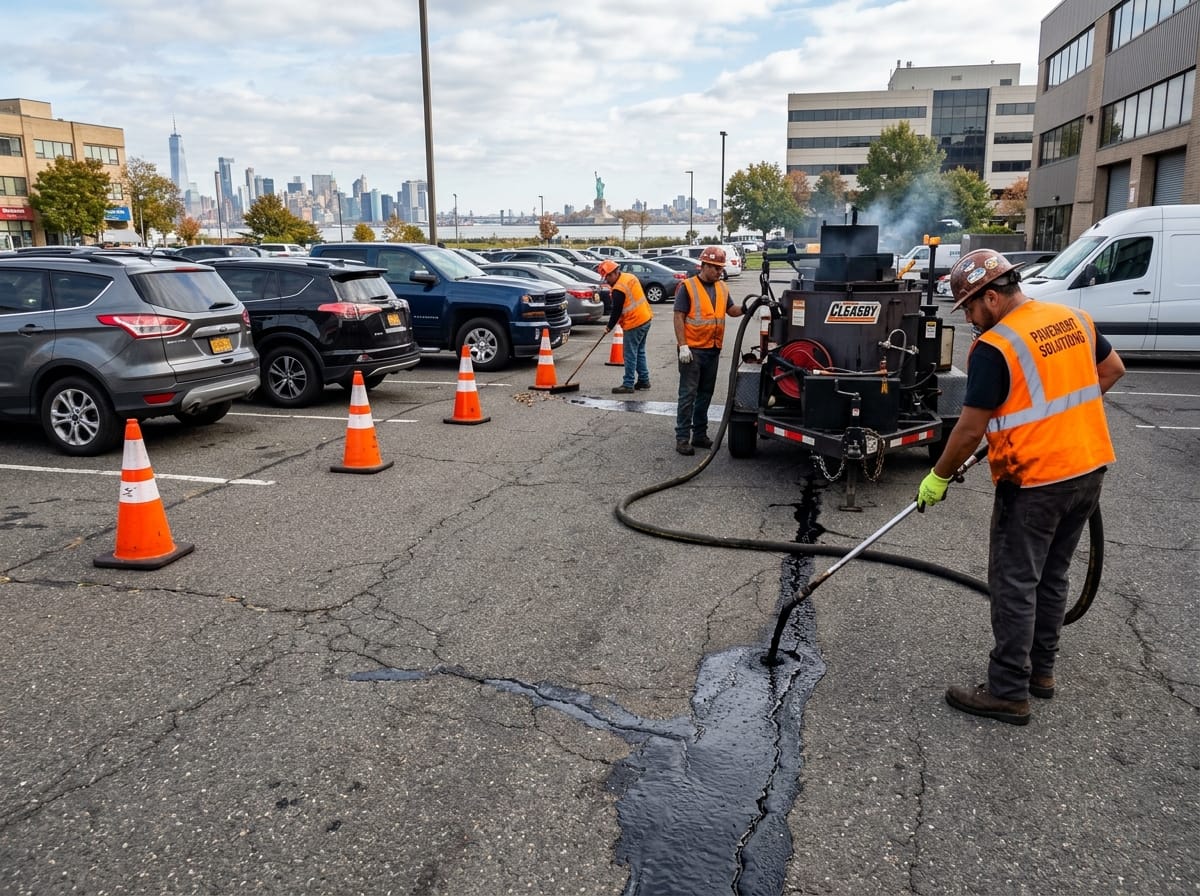
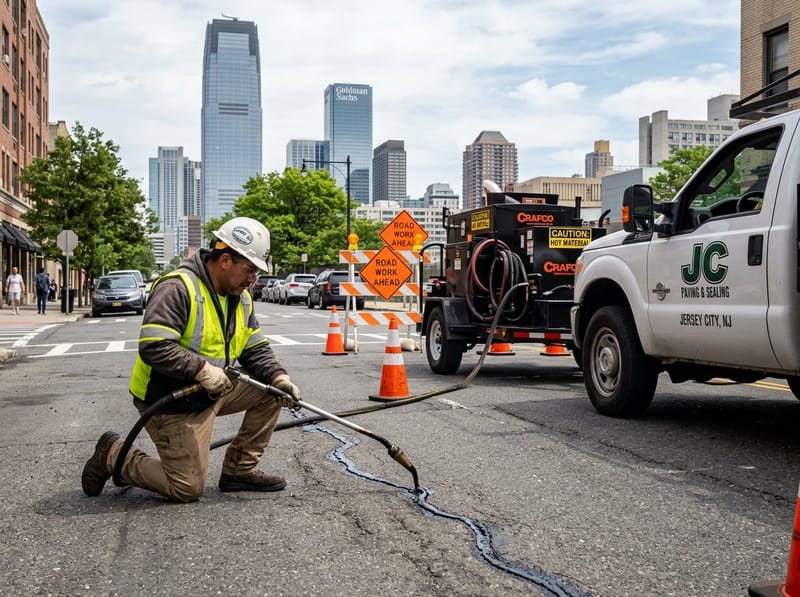
Next comes preparation. That may include removing failed areas, cleaning loose material, repairing the base, and reshaping the surface so water moves away instead of collecting in low spots. Proper preparation is the part that many people never see, but it is one of the biggest reasons a lot performs well after the work is done.
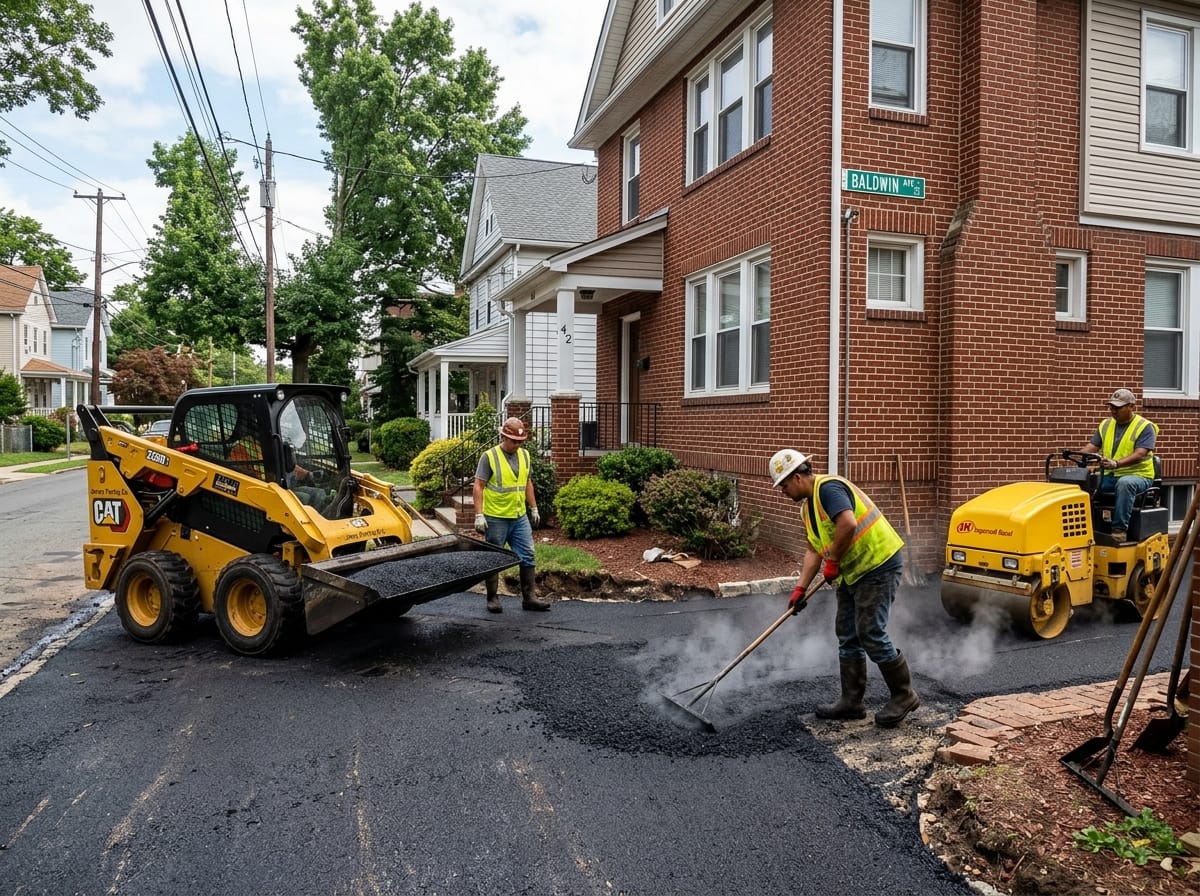
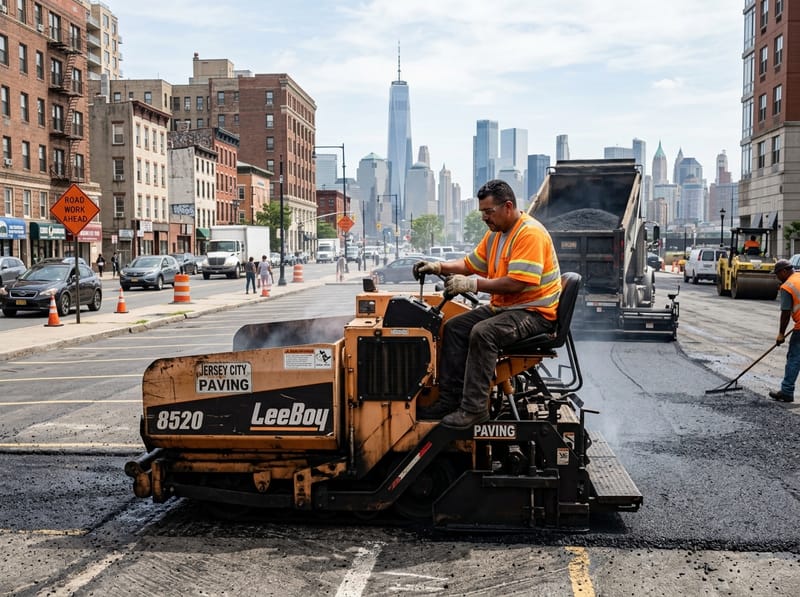
After the site is ready, the asphalt is placed in a controlled way so the new surface stays even and compact. Good paving is about consistency. The surface should feel smooth, sit at the right grade, and connect cleanly with curbs, sidewalks, entrances, and other paved areas.
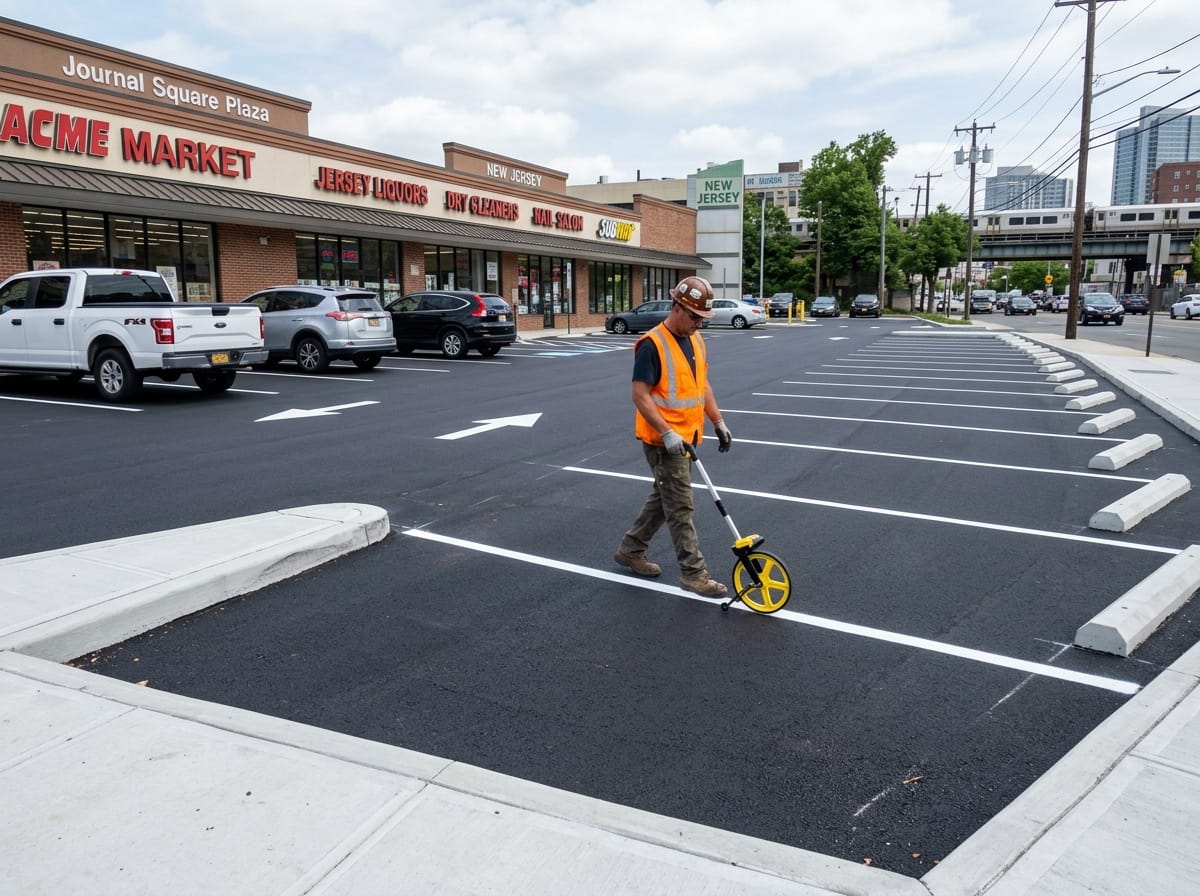
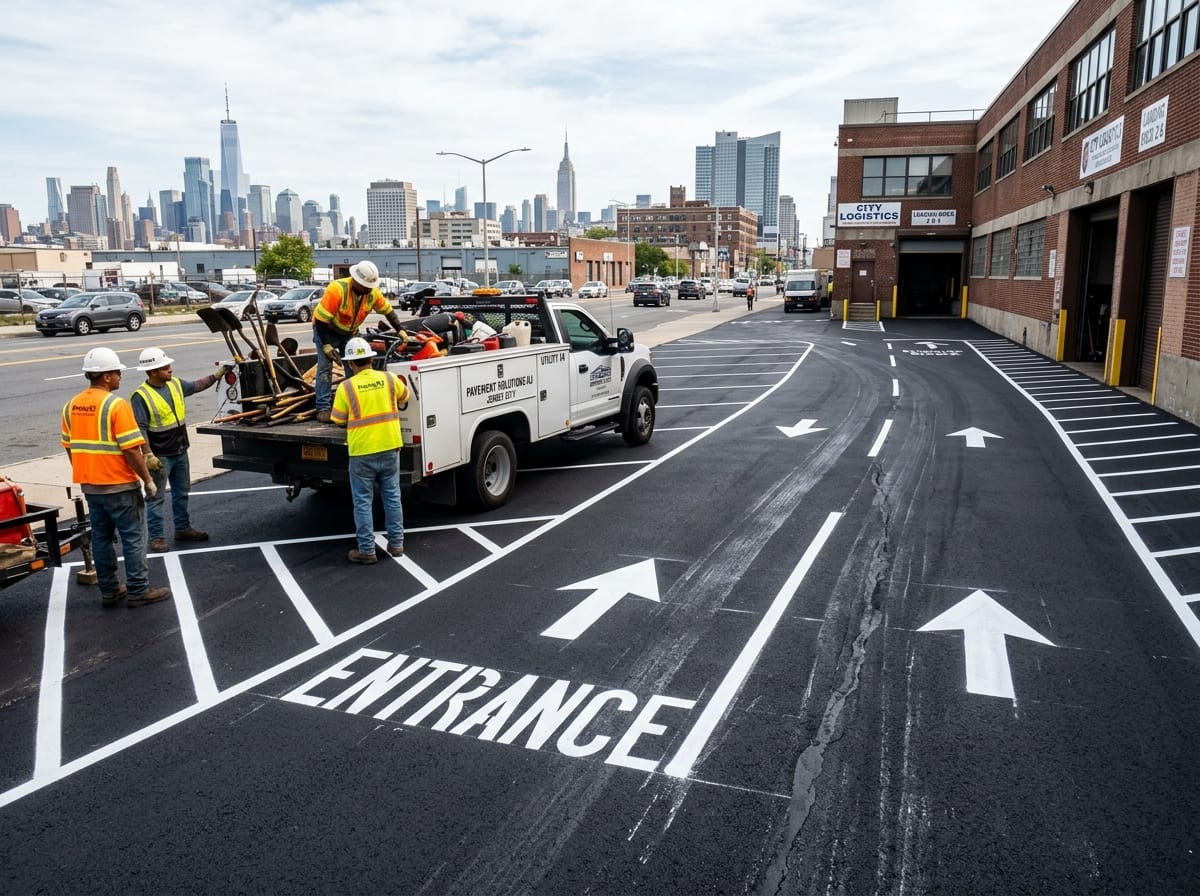
Once the asphalt is installed, compaction finishes the job. This step helps the surface lock together and resist early wear. When the lot is ready, striping and marking can be added so parking spaces, lanes, and directional movement are clear for everyone using the property.
- Site review and layout planning
- Removal of failed pavement where needed
- Base repair and grading corrections
- Asphalt placement and surface shaping
- Final compaction for a strong, even finish
- Striping and final site cleanup when applicable
That method gives you more than a fresh look. It gives you a parking lot that is easier to navigate, more dependable under traffic, and better suited to Jersey City conditions.
Why Local Knowledge Matters For Jersey City Properties
Jersey City properties have their own set of paving challenges, and local knowledge helps the finished lot work better from day one. Tight urban access, constant movement, mixed-use traffic, delivery activity, and weather swings all shape how a parking lot should be designed and paved.
Local experts understand that a lot here is rarely used in a simple way. Some properties need room for tenants, others need space for customers, and many have both at the same time. That means the layout has to support movement without creating bottlenecks, confusion, or unsafe turning areas.
Drainage also matters more than many property owners expect. In a dense city setting, water needs a clear path off the pavement. If the slope is wrong or the low spots are not corrected, the surface can hold water and wear down much faster. That is why parking lot paving in Jersey City should always account for the shape of the site, not just the visible damage.
Your neighbors trust us because good paving is not only about making asphalt look fresh. It is about understanding the property, the traffic, and the local conditions that shape performance over time. When the work is planned with those details in mind, your lot is more likely to stay smooth, functional, and easier to maintain.
What You Can Expect After The Job Is Done
After parking lot paving in Jersey City, you should expect a surface that feels easier to drive on, easier to walk across, and easier to present to customers or tenants. The lot should look cleaner, drain more effectively, and support a more organized parking flow.
In practical terms, that often means fewer problem spots, less standing water, and a better first impression when people arrive. A newly paved lot also makes it easier to mark spaces, direct traffic, and guide vehicles through the property with less confusion.
Long-term care still matters after the paving is complete. Keeping the surface clean, watching for drainage changes, and addressing small issues early can help protect the investment. When your lot is built correctly and maintained with care, it stays useful longer and creates fewer headaches for the people managing the property.
If you are comparing options for parking lot paving in Jersey City, Tar Titans of Jersey City can help you think through the site conditions, the traffic pattern, and the result you want for your property. The right paving plan gives you a lot that works better now and is easier to manage later.